
Other Tick Borne Diseases
Bartonella
Read More
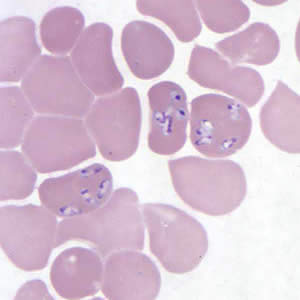

Besides the Borrelia species that cause Lyme disease, many ticks also carry other disease-causing pathogens called coinfections. One of those coinfections, Babesia, is a malaria-like parasite, and it infects the red blood cells of its host. The disease resulting from a Babesia infection is called babesiosis. It can be acquired from the bite of an infected tick, but it can also be transmitted through mother-to-child (congenital) in utero or during a blood transfusion. Currently, there aren’t any FDA-approved tests to screen blood donors for Babesia, according to the Centers for Disease Control and Prevention. Babesiosis is the most commonly reported transfusion-related parasitic infection in the United States.
Approximately 40% of people infected with Lyme disease may also be infected with Babesia. But actual incidents of the infection are likely underreported. The severity of Babesia symptoms varies from person to person. One person can exhibit mild or no symptoms despite being infected, while another person experiences severe or life-threatening symptoms. Several species of Babesia affect human health, but the most prevalent species in the United States is Babesia microti.
The blacklegged tick or deer tick (Ixodes scapularis), the same tick that carries Lyme disease, is responsible for the transmission of Babesia as well. The highest concentrations of ticks carrying Babesia can be found in the East Coast and Midwest, but it’s also been reported in the South and the West Coast. Other species of Babesia that can infect humans include Babesia duncani (WA-1) on the West Coast and Babesia divergens, which has shown up in various US states.
Babesia symptoms often overlap with those of Lyme disease and can be mild in the initial stage of the infection. As the illness progresses, there are a few key differences to clue you and your healthcare provider in that you might have contracted the coinfection. Hallmark symptoms of Babesia include:
Other symptoms that can accompany a Babesia infection are:
In certain circumstances, such as when a person doesn’t have a spleen, is immunocompromised, or elderly, Babesia can be a rapidly progressing, serious illness, lasting weeks to months. Like Lyme disease, some people experience persistent babesiosis, and relapses occur on a cyclical basis, such as every few months. Problems that might arise from Babesia include:
To test for Babesia, we recommend using the CLIA-certified laboratory IGeneX. Additionally, we advise patients to work with a Lyme disease specialist who has advanced training and expertise in diagnosing and treating Lyme and coinfections.
To locate a Lyme disease specialist with knowledge of Babesia, consult the Provider Search through the International Lyme and Associated Diseases Society.
The MSIDS model, a 16-point assessment to identify sources of infections, immune dysfunction, and inflammation, can also be of use to identify Babesia. After you’ve filled out the questionnaire, you can have the report emailed to you to print off and take with you when you visit your healthcare provider.
Babesia infection is commonly treated using a regimen of antimalarial medications plus antibiotics. Relapses can happen following the completion of treatment, and patients will need to receive additional treatment for the infection. Self-care strategies, supplements, and herbal remedies can also be useful tools in supporting your recovery efforts.
An emerging treatment method called methylene blue has seen success in treating Babesia and other co-infections.
Learn more about all things Babesia, including how experts assess and treat it via the below webinar: